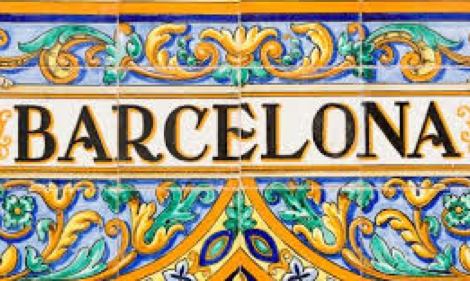
The origin Barcelona and alternative names for Barcelona, including synonyms or abbreviations:
* At least two other versions of the foundation of Barcelona have been proposed by romantic historians since the fifteenth century. One credits the Carthinagean general Hamilcar Barca, father of Hannibal, with the foundation of the city around 230 BC under the name of Barkenon, Barcelino or Barci Nova. Despite the similarities between the names of the Carthinagean dynasty and the modern city, it is usually accepted that the origin of the name “Barcelona” is the iberic Barkeno.
* The second attributes the foundation of the city to Hercules, some 400 years before the foundation of Rome. During the fourth of his Labours, Hercules joins up with the Jason and the Argonauts in search of the Golden Fleece, traveling across the Mediterranean in nine ships. One of the ships is lost in a storm off the Catalan coast, and Hercules sets out locate it. He finds it wrecked by a small hill, but with crew saved. The crew were so taken by the beauty of the location that they founded a city with the name Barca Nona (“Ninth Ship”).
Nowadays, the following names are also used when referring to Barcelona.
– Barna: A common colloquial name for the city used by its residents and surrounding area, specially among young people.
– BCN: A written-only shortening popularised by the Council, very popular in sms messages!
– Ciudad Condal: A synonym commonly used in the Spanish media. It is in reference to the city’s status as a seat of the Counts of Barcelona, a title through much of its history merged through much of its history, merged with that of King of Aragon.
– Can Fanga: Slightly disparaging or humoristic term for Barcelona particularly used by people from the Girona province. Can Fanga, the House or Farm of Mud, in reference to its muddy unpaved streets in the late 19th – early 20th century. More here on Can Fanga, pixapins and quemacus
– Barcino: the old city’s Roman name (see below)
* Note: The term ‘Barça‘ is NOT used for the city, only for its most universal institution. If you want to use a shortened term, use Barna instead (e.g. ‘Me voy a Barna esta tarde’ – I am going to Barcelona this afternoon)
Names in other languages for Barcelona
Bartzelona (Basque), Barcelone (French), Barcellona (Italian, Maltese), Barselona (Turkish) Barcelono (Esperanto), Barzelona (Ripuarian), Barcelonu (Czech, Croatian, Latvian), Barselonu (Serbian), Barcelonę (Polish), Barcelonaa (Finnish), Barcelono (Slovene), Barcino, Barcillona, Barçellonn-a (Romanian), Барселона (Russian), Βαρκελώνη (Greek), 바르셀로나 (Korean), برشلونة (Arabic), Բարսելոնա (Armenian), ברצלונה (Hebrew), ბარსელონა (Georgian), バルセロナ (Japanese), บาร์เซโลนา (Thai) and 巴塞罗那 (Chinese).
Historical names of Barcelona
During the Middle Age the city was known for different names like Barchinona, Barçalona, Barchelona and Barchenona.
Common typographic mistakes
– Barselona (common mistake in English, but it is the correct spelling in Turkish)
– Barthelona (the ‘th’ is a very similar sound for the ‘c’ in Barcelona in Castillian, but not in Catalan)